


Slippers
The line with the simplest construction and the least room to hide. A slipper has few parts, so every one of them is on show, and the difference between a good one and a cheap-looking one is almost entirely material and finish.
Styles already built on this line.
Sample pairs from the development bench. Send the one closest to yours and it can be priced.
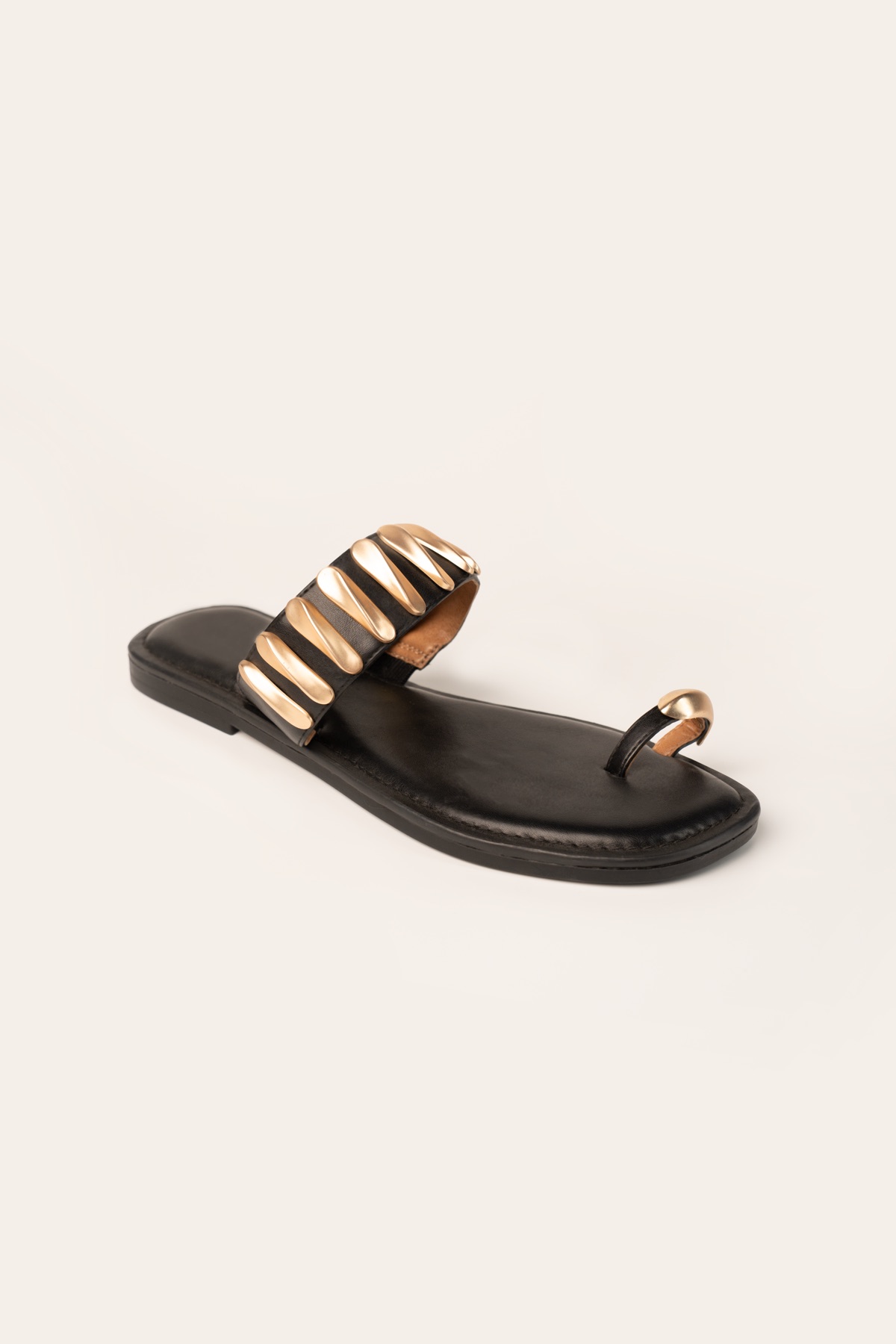
The bars are individually set, so the labour on this style sits in the trim rather than in the construction. Finishing is what keeps a flat sandal from looking cheap, and it is where this line spends its attention.
| Upper, as photographed | Flat toe-ring sandal, wide vamp band set with a row of metal bars |
|---|---|
| Sole, as photographed | Moulded footbed on a thin unit |
| Material | Hide grade and finish agreed at quotation |
| Construction | Confirmed at sampling |
| Size run | Graded from the approved sample |
| Colourways | To your specification |
| Terms | FOB, ex Bình Dương |
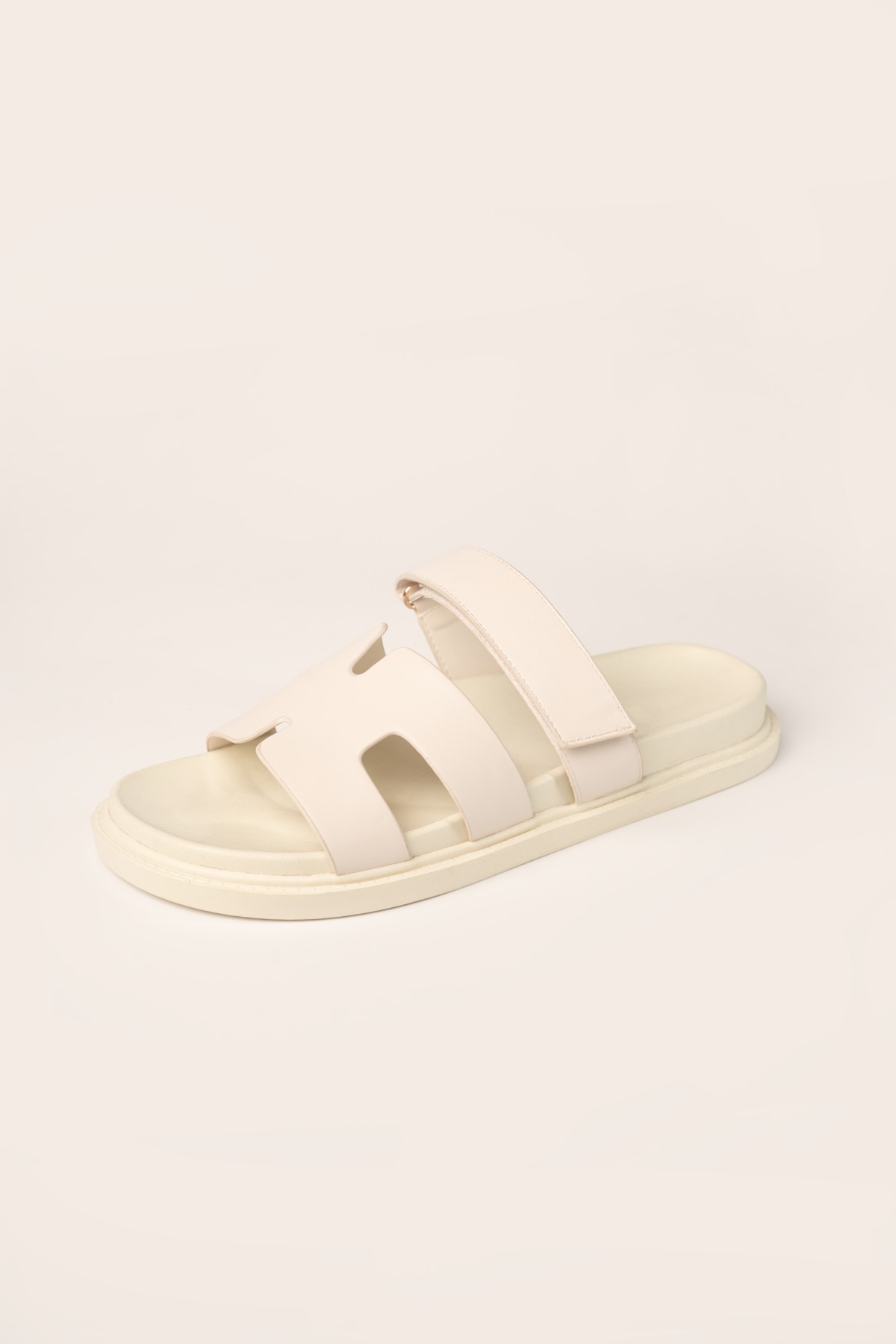
A cut-out band puts every edge on show, so edge finishing is the specification that matters most here. The adjustable strap is what lets one width fit a wider range of feet.
| Upper, as photographed | Flat slide, cut-out front band, adjustable instep strap |
|---|---|
| Sole, as photographed | Moulded footbed on a thin unit |
| Material | Hide grade and finish agreed at quotation |
| Construction | Confirmed at sampling |
| Size run | Graded from the approved sample |
| Colourways | To your specification |
| Terms | FOB, ex Bình Dương |
How a slipper
is actually built.
Five stages run on this floor. On this line the construction is the easy part — what a slipper is judged on is the material and the finishing, and both are visible.
-
Design and sampling
Material, trims and finish are settled on a physical pair. On a product where the surface is the product, a reference beats a description.
-
Cutting
Cut on the same table as a dress shoe, against the same approved sample. Fewer parts means fewer places for a careless piece to hide.
-
Assembly
Straightforward work, and all of it visible: an edge finished carelessly or a buckle set slightly off is the whole of what a customer sees.
-
Finishing and inspection
Edges, trims and packing. Every pair is checked against the approved sample before it is boxed for export.

What to send
for a slipper quotation.
Four things move the price on this line, and the first is worth more than the drawing.
-
Reference pair
The single most useful thing you can send. Surface and finish are the product here, and they are hard to write down.
-
Upper material
Leather, textile, synthetic or a mix. This is most of the cost and all of the look.
-
Trims and fittings
Buckles, straps and edges are where a slipper is judged, because there is nothing else to look at.
-
Sole unit
Stock component or made to your specification — it changes cost and timing differently.
Say how many styles the programme runs to — they are usually several related ones, and saying so lets them share capacity. Terms are FOB, ex Bình Dương, or built to your nominated suppliers; minimums, sampling and bulk timing are quoted per programme.
Audited against- Global Recycled Standard Certification
- amfori BSCI Audit programme
- SMETA 4-Pillar Audit methodology
- SCAN Audit programme
 Global Recycled Standard
 amfori BSCI
 SMETA 4-Pillar
 SCAN
SCAN
Send the pair you want matched.
With the material and the trim you have in mind. That is enough to price, and it is a great deal more useful than a category.